
Sindh eyes mineral-based industrialisation, seeks to expand Thar Coal beyond power generation
KARACHI (Staff Report): The Sindh government is seeking to transform the province’s vast mineral resources into a broader industrial and export-oriented economic base, shifting its focus beyond raw mineral extraction and coal-based power generation towards local processing, value addition and downstream manufacturing.
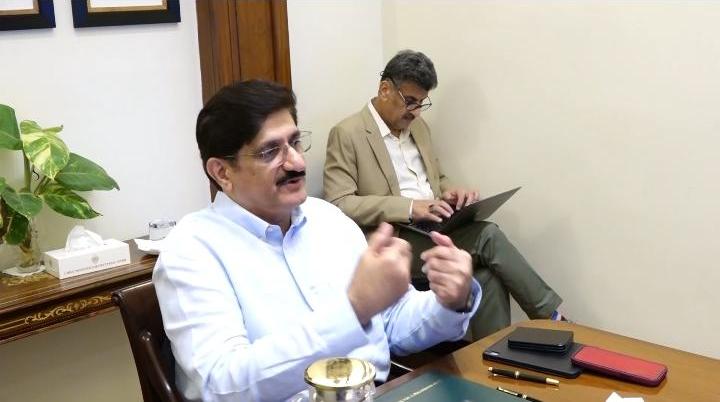
Chief Minister Syed Murad Ali Shah, chairing a meeting on mineral resources and investment opportunities at the Chief Minister’s House on Wednesday, called for greater domestic and foreign investment in mineral exploration, modern mining, processing and value-added industries.
The proposed strategy places Thar coal at the centre of Sindh’s industrial ambitions, while also identifying opportunities in granite, iron ore, marble, limestone, china clay, silica sand and other mineral resources.
According to a briefing by Provincial Minister for Minerals Syed Sardar Ali Shah, Thar holds estimated coal reserves of 175 billion tons, while coal-based power generation capacity has reached 3,300 megawatts.
The provincial government believes these resources could support industrial projects beyond electricity generation, particularly coal-based briquettes and urea manufacturing, opening potential avenues for investment and domestic industrial development.
The expansion of coal utilisation into fertiliser and other industrial products could help create additional economic value from locally available resources. However, the commercial viability of such projects would depend on investment, technology, infrastructure and production costs.
Murad Ali Shah stressed that Sindh must move beyond exporting raw minerals and focus on developing domestic processing facilities and industries to capture greater value from its natural resources.
He directed the minerals minister to explore joint ventures with local and international companies, emphasising transparent regulations, competitive incentives and a conducive investment environment to attract long-term capital.
The chief minister also highlighted the importance of the Thar railway project in facilitating coal transportation to industrial consumers across the country, potentially strengthening supply chains and expanding the commercial use of Thar’s coal reserves.
Apart from coal, the government sees significant opportunities in developing mineral-processing industries, including cutting and polishing facilities for granite and marble, which could support domestic manufacturing and increase the export potential of finished products.
The proposed approach also seeks to introduce modern mining technologies and scientific exploration techniques to improve resource utilisation, attract investment and generate employment opportunities.
The provincial government has stressed that industrial expansion must be accompanied by environmental safeguards and protection of local communities.
The briefing also highlighted development initiatives in Thar, including employment, education, healthcare, clean water provision and environmental measures. More than one million trees have reportedly been planted in the region, alongside ongoing efforts for water conservation and biodiversity protection.
Murad Ali Shah directed relevant departments to ensure responsible mining practices, environmental protection, local employment and rehabilitation of areas affected by mining activities.
The government’s latest push signals an effort to position Sindh’s mineral resources as a foundation for industrial diversification rather than limiting their economic contribution to extraction and energy production.
However, translating the province’s mineral potential into a competitive industrial sector will require substantial investment, reliable infrastructure, transparent licensing procedures and commercially viable processing projects.