
Mandviwalla exposes KCCI: Asleep all year, awake for budget
KARACHI (TKP Report): If there was a moment when the Karachi Chamber of Commerce and Industry stood exposed before its members, it was Thursday.
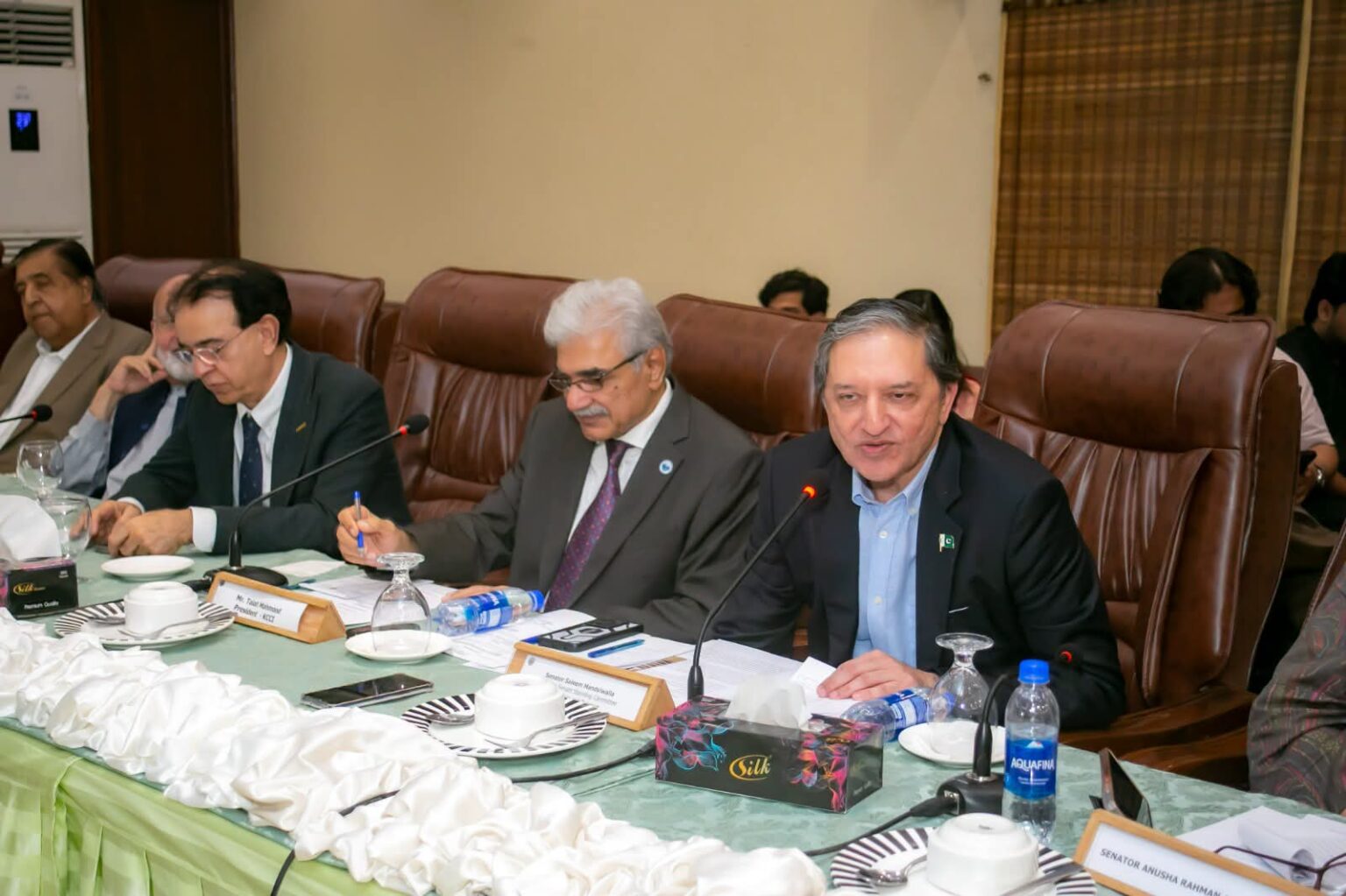
Senator Saleem Mandviwalla, Chairman of the Senate Standing Committee on Finance and Revenue, did not come to Karachi to praise KCCI. He came with a performance report and a question no one could answer: Where is KCCI for the other eleven months of the year?
“Budget preparations begin in March, but the Karachi Chamber approaches us in June, when the budget has largely been prepared,” Mandviwalla said.
For years, KCCI has projected itself as the champion of Karachi’s business community. But Mandviwalla’s visit exposed a different reality: a chamber that has mastered the art of the press conference and the last-minute memorandum, but has failed at year-round advocacy.
He pointed out that the chamber did not present budget-related proposals during the rest of the year. It wakes up only when the budget is finalized, and then complains that its concerns were ignored.
Mandviwalla’s solution was basic: establish a think tank. Conduct year-round research. Prepare an evidence-based shadow budget. Submit proposals in March or April, not in June. In other words, do the job you claim to do.
The Senate Finance Committee, he said, was prepared to take up recommendations with the government. But meaningful consultation required early engagement, not last-minute demands. KCCI alone seems to believe advocacy means showing up at the eleventh hour and demanding a rewrite.
Mandviwalla came with a record. He said the delegation had not come to criticize anyone but to share the committee’s performance report. And that report made the chamber look idle.
He detailed how the committee examined the Pakistan Remittance Initiative, introduced in 2010 to encourage overseas Pakistanis to send money through banking channels. He said payments to banks had ballooned to Rs120 billion annually. The committee intervened to end unnecessary expenditure. He also cited Visa and Mastercard collecting fees in dollars on rupee transactions, causing outflows of $300 million to $400 million, and intervention on bank SMS charges imposed without consent.
To be fair, remittance policy is not KCCI’s job. It belongs to the State Bank, the Ministry of Finance, and the PRI. KCCI cannot set incentives or regulate banks. But that is not the charge. The charge is advocacy failure. KCCI members suffered LC blocks, dollar outflows, and bank charges. A real chamber would have flagged these leakages and taken evidence to Parliament years ago. Instead, a Senate committee had to do it.
And when KCCI finally did speak, what did it offer? President Talat Mahmood presented a list that sounded less like a national economic agenda and more like a wishlist. He called for increasing the research tax rebate from 25 per cent to 75 per cent, extending tax exemption certificates for non-profits from six months to three years, removing additional sales tax on K-Electric bills, and duty exemption on firefighting equipment, citing the Gul Plaza and Bolton Market fires.
These demands are reasonable, but reactive and disconnected from any larger industrial strategy. There was no proper shadow budget. No comparative study. No roadmap for exports. No plan to fix competitiveness.
That plan had to come from someone else. Former president and Businessmen Group Chairman Zubair Motiwala had to propose what KCCI should have proposed years ago: an independent survey comparing Pakistan’s production costs with India, Sri Lanka, Thailand, Cambodia, Bangladesh and Vietnam. He cited textile exports of $16 billion to $17 billion, compared with around $54 billion for Bangladesh, and cost differences of 8 to 18 per cent.
Even the business circles have frequently said, that Karachi does not need a chamber that performs advocacy. It needs a chamber that does advocacy. Until KCCI builds its think tank, produces its shadow budget in March, and engages parliament every month, its claim to represent Karachi will remain what Thursday exposed: a self-proclaimed struggle, with little struggle to show.