
Pakistan’s auto industry faces localization test as PM questions 6 years of incentives
ISLAMABAD (Staff Report): Pakistan’s automobile industry is facing renewed scrutiny over its localisation performance after Prime Minister Shehbaz Sharif questioned why manufacturers have failed to meet their domestic parts production commitments despite receiving government incentives and expansion facilities over the past six years.
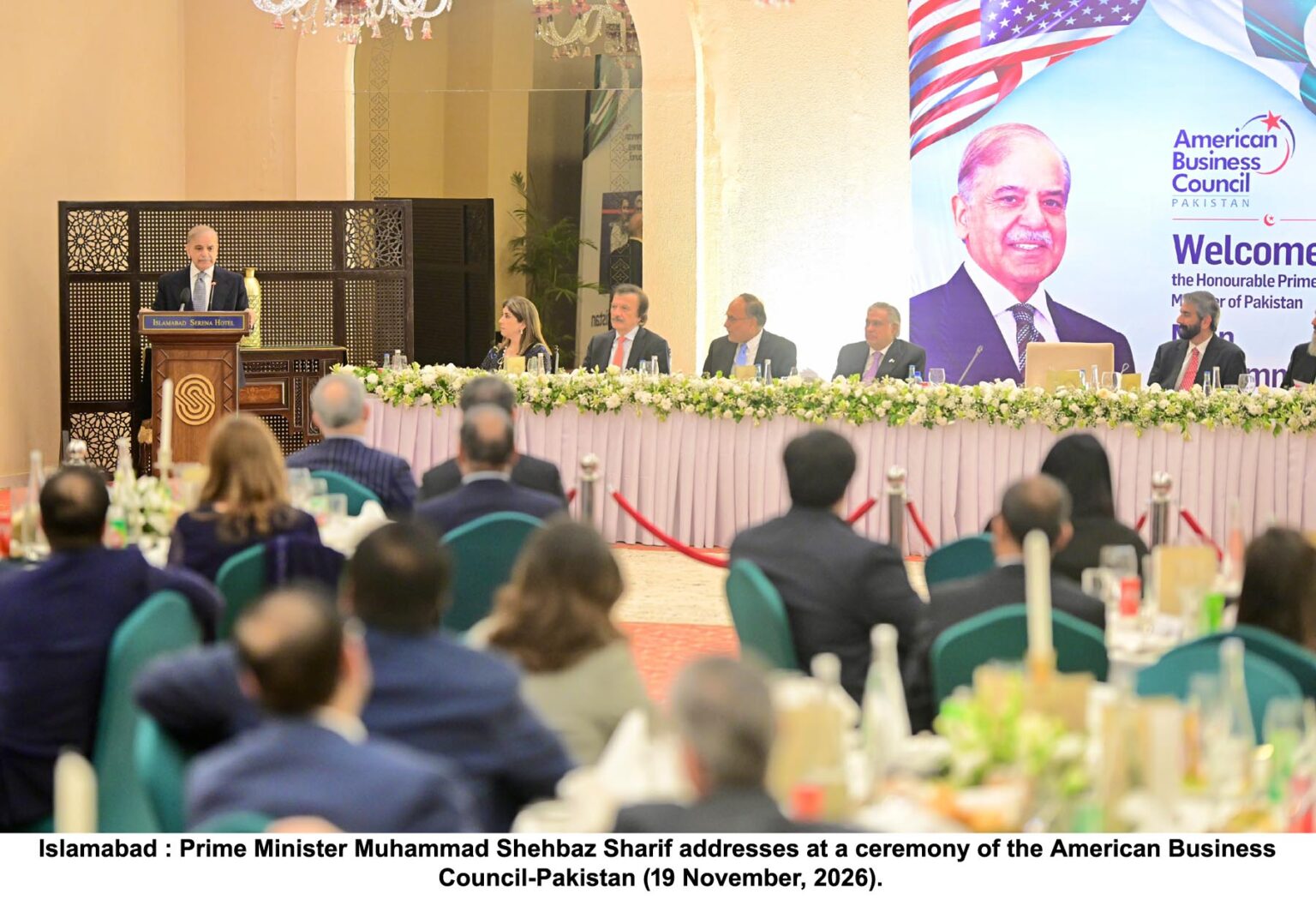
Addressing an American Business Council of Pakistan event on Thursday, the prime minister said automobile manufacturers had provided written commitments, backed by irrevocable guarantees, to progressively increase the local manufacturing of vehicle components to 60%, 70%, 80% and eventually 90%. However, the current localization level remains close to 50%, raising questions about the effectiveness of industrial incentives and the country’s ability to develop a competitive domestic automotive supply chain.
The prime minister’s remarks highlight a longstanding challenge facing Pakistan’s automotive sector: converting a protected domestic market and government support into deeper industrial capacity, technology transfer and export competitiveness.
For an industry that has historically relied heavily on imported components, the localisation question carries implications beyond automobile prices. Greater domestic manufacturing could help reduce pressure on foreign exchange reserves, create employment, develop engineering capabilities and strengthen linkages between vehicle assemblers and local parts manufacturers.
However, the gap between promised and actual localisation suggests that government support has not necessarily translated into the level of industrial development envisaged by policymakers.
Sharif said Pakistan’s industrial transformation required a different approach, adding that the government must evaluate whether existing incentives are producing the intended results. His criticism comes as the country attempts to move away from import-dependent economic activity towards an export-oriented growth model.
The automotive industry occupies an important position in this transition because it connects multiple manufacturing segments, including steel, plastics, rubber, electronics, engineering and transportation equipment. A stronger domestic component manufacturing base could therefore generate economic activity across a wider industrial ecosystem.
The prime minister also questioned the industry’s readiness to compete internationally, indicating that localisation alone would not be sufficient unless manufacturers improved productivity, efficiency and technological capabilities.
Electric vehicles emerge as a policy alternative
Alongside the localization debate, the prime minister identified electric vehicles (EVs) as an important part of Pakistan’s future industrial and energy strategy.
He said the country needed to encourage modern automotive technologies to reduce its dependence on imported energy, address environmental challenges and make transportation more efficient and affordable.
Pakistan imports more than 90% of its energy requirements, according to the prime minister. This dependence exposes the economy to international energy price movements and external supply disruptions, making the transition towards alternative technologies an increasingly important policy consideration.
Sharif said the government had held consultations over four months involving the finance minister, deputy prime minister, industry minister, commerce minister, federal secretaries and other relevant officials to develop a policy framework for promoting electric vehicles.
Following these consultations, the government had agreed on an approach intended to encourage electric vehicles while discouraging conventional internal combustion engine (ICE) vehicles.
The proposed transition could reshape Pakistan’s automotive industry by creating opportunities for investment in electric vehicle assembly, battery technology, charging infrastructure and associated component manufacturing.
However, the transition also presents challenges. Domestic manufacturers would need to develop technological capabilities, establish reliable supply chains and invest in new production facilities. A shift towards EVs without sufficient local industrial capacity could also create new import dependencies, particularly in batteries and electronic components.
For policymakers, the challenge will be to ensure that the transition strengthens domestic manufacturing rather than simply replacing imports of conventional automotive components with imports of electric vehicle technology.
From protection to industrial competitiveness
The prime minister’s criticism reflects a broader policy question concerning the relationship between government incentives and industrial performance.
Pakistan has historically used tariffs, regulatory measures and other incentives to support domestic manufacturing. While such measures can provide industries with room to expand, prolonged protection does not automatically guarantee international competitiveness.
The latest remarks suggest that the government wants industries to demonstrate measurable progress in return for public policy support.
For the automotive sector, this could mean greater emphasis on domestic value addition, technology transfer, export development and the competitiveness of locally manufactured components.
A more developed parts manufacturing industry could also help Pakistani suppliers enter regional and international automotive supply chains. However, achieving this would require consistent production standards, economies of scale, investment in research and development and predictable industrial policies.
The wider export challenge
The automotive debate comes as the government seeks to place Pakistan on a sustainable, export-led growth trajectory.
Speaking at the same event, Sharif said the private sector must play the central role in transforming the economy, while the government’s responsibility should be to facilitate businesses, encourage investment and remove bureaucratic obstacles.
He also highlighted opportunities in agriculture, information technology, artificial intelligence, minerals and manufacturing, stressing that Pakistan could no longer depend solely on economic stabilisation measures.
The prime minister’s emphasis on exports is particularly relevant for the automotive industry, where a stronger domestic supplier network could potentially support exports of components and finished vehicles.
Nevertheless, the sector’s progress will ultimately depend on whether manufacturers can move beyond domestic market dependence and develop products capable of competing on quality and cost in international markets.
Pakistan’s automotive industry therefore faces two interconnected tests: fulfilling its long-standing localisation commitments and preparing for the technological transition towards electric mobility.
The central issue is no longer simply how much of a vehicle can be assembled or sourced locally. It is whether government support can produce a technologically capable, competitive and export-oriented automotive manufacturing base.
The prime minister’s remarks have brought that question back into the spotlight, placing the industry’s past commitments and future investment strategy under renewed scrutiny.