
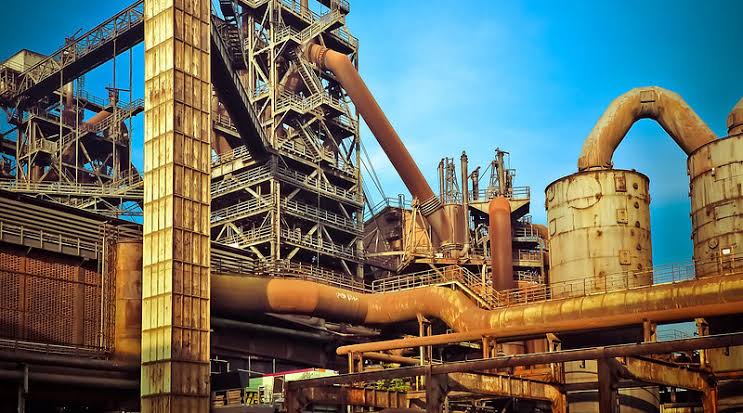
Pakistan Steel Mills: Revival must not become a land-transfer exercise
KARACHI (Staff Report): The proposed allocation of 6,409 acres of Pakistan Steel Mills (PSM) land to the Special Investment Facilitation Council (SIFC) for the establishment of the Karachi Industrial Park has raised questions over land valuation, due diligence, management accountability and the future of the country’s largest integrated steel mill.
The PSMC Stakeholders Group, in a letter dated November 18, 2026, addressed to the Chairman of the PSM Board of Directors and the Chief Executive Officer, has called for an urgent meeting with relevant authorities, arguing that decisions concerning the mill’s assets and proposed Special Economic Zone (SEZ) should be taken through a transparent and legally compliant process.
The group has questioned the proposed allocation of 6,409 acres for the industrial park, claiming that the initiative was undertaken without adequate due diligence and proper valuation. It also alleged that industrial plots in the proposed development were being valued at more than Rs60 million per acre.
The stakeholders have sought clarity on the land’s valuation, proposed utilization and the legal framework governing its allocation, raising concerns about the financial implications for the state-owned industrial asset.
The letter also highlighted the mill’s financial position, alleging that Pakistan Steel Mills suffered financial losses exceeding Rs800 billion between 2008 and 2026. It questioned the absence of an established management structure, stating that permanent appointments for key positions, including chief executive officer, chief financial officer, principal executive officers and company secretary, had not been completed.
According to the group, the Board of Directors has also failed to appoint a permanent CEO and other senior management officials, while the organisation has advertised the hiring of consultants.
The stakeholders argued that engaging consultants without establishing permanent management and a clear operational roadmap could repeat administrative shortcomings that have affected the organisation in the past.
Another concern raised in the correspondence relates to the authenticity of PSM’s audited accounts. The group claimed that the mill’s accounts had remained doubtful, with pending reconciliation of liabilities and debtors, and that no provisional or audited financial statements had been available from July 2023 to November 2026.
The letter further referred to a September 22, 2026 report in Express Tribune concerning the mill’s accumulated losses and cited Supreme Court observations regarding accountability for its financial decline.
The stakeholders also raised concerns over employee retrenchments and legal expenditure, alleging that workers were removed on November 27, 2020, before the relevant judicial directions were issued. They claimed that subsequent legal proceedings across labour courts and higher judicial forums had generated additional expenses.
The proposed industrial park has also raised questions about employee representation. According to the letter, PSM employees collectively hold a 12 per cent shareholding in the corporation but have not been consulted regarding the establishment of the SEZ.
The group further stated that a proposal for the revival and accountability of Pakistan Steel Mills, submitted in December 2019, remained unresolved.
It also referred to the underperformance of seven Export Processing Zones and 44 Special Economic Zones, arguing that previous experiences should be considered before proceeding with another large-scale industrial development initiative.
The stakeholders have requested an urgent meeting with the relevant authorities to discuss the mill’s future, address outstanding financial and administrative issues, and establish a transparent roadmap to prevent further losses.
The central question surrounding the proposed Karachi Industrial Park remains whether the initiative will contribute to the revival of Pakistan’s steel industry while protecting public assets and addressing the institutional and financial problems of Pakistan Steel Mills.