
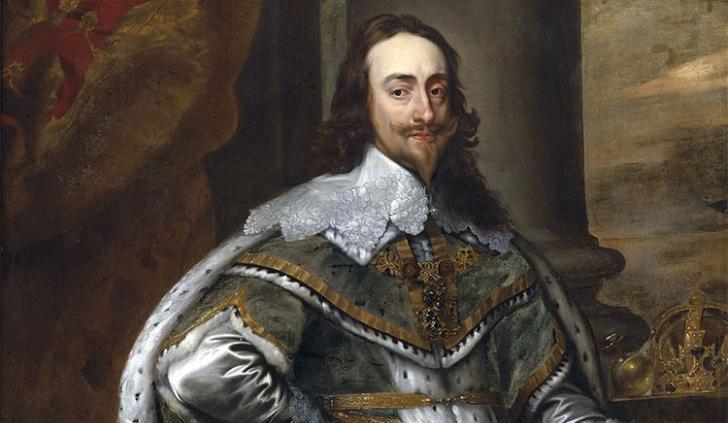
When a King tried to rule without Parliament: The Economics of Charles I
KARACHI (TKP Feature): On November 19, 1600, Charles I was born at Dunfermline Palace in Scotland. He would eventually become King of England, Scotland and Ireland, but his reign would be remembered less for royal grandeur than for a political and financial confrontation that transformed the relationship between the Crown, Parliament and taxpayers.
Charles I’s reign offers an important historical lesson in public finance: raising revenue is not simply a financial exercise; it is also a question of legal authority, institutional accountability and the consent of those who pay taxes.
When Charles ascended the English throne in March 1625, he inherited a monarchy facing financial pressures, expensive foreign policy ambitions and an increasingly assertive Parliament. His determination to preserve royal authority brought him into conflict with lawmakers over taxation, government expenditure and the limits of executive power.
The confrontation eventually led to an extraordinary experiment in government without Parliament.
The 11-year experiment of ruling without Parliament
The conflict intensified during the 1620s, when Parliament challenged the King’s attempts to collect revenue without its approval. One major dispute concerned tonnage and poundage, customs duties traditionally granted to monarchs by Parliament.
In 1625, Parliament authorized Charles to collect these duties for only one year rather than for the duration of his reign. However, the King continued collecting them.
The disagreement extended to forced loans in 1626, through which the Crown attempted to obtain money from subjects without parliamentary approval. Those refusing to contribute faced imprisonment.
In 1628, Parliament presented the Petition of Right, demanding restrictions on taxation without parliamentary consent, arbitrary imprisonment and other exercises of royal authority.
Charles dissolved Parliament on March 10, 1629, following another confrontation with the House of Commons. He did not summon another Parliament for the next 11 years.
This period, from 1629 to 1640, became known as the Personal Rule.
How the Crown raised money without Parliament
Without parliamentary grants, Charles needed alternative sources of revenue to finance the monarchy, administration and defence.
His government expanded several existing revenue-raising mechanisms, including customs duties, fines, monopolies and other payments associated with the royal prerogative.
According to historical material published by the UK’s National Archives, these measures helped increase the King’s annual income from approximately £600,000 to £900,000 during the Personal Rule.
Another controversial mechanism was the sale of monopolies and commercial patents. These arrangements granted individuals or companies exclusive control over particular trades or commercial activities.
Such privileges could generate income for the Crown, but they also restricted competition. Other traders could be required to pay for access to particular markets or risk being excluded from them.
The arrangement illustrates how government revenue policies can influence competition, market access and the distribution of economic opportunities.
Ship Money: The tax that intensified the crisis
The most controversial financial measure associated with Charles I was Ship Money.
Traditionally, coastal communities were required to provide ships or financial contributions for naval defence during emergencies. Charles expanded this practice, initially extending it beyond coastal areas and eventually imposing it across inland counties as well.
The policy became particularly contentious because it was imposed without parliamentary approval.
In 1637, John Hampden, an English landowner and political opponent of the King’s policies, challenged the legality of Ship Money in court by refusing to pay.
The court eventually ruled in favour of the Crown by a narrow majority of seven judges to five.
Although the decision allowed the government to continue collecting the levy, resistance and resentment persisted.
Financial pressure forces the King back to Parliament
Charles’s religious policies in Scotland triggered resistance from the Covenanters, leading to the Bishops’ Wars. The military confrontation created additional expenditure at a time when the Crown needed substantial resources to maintain its forces.
In April 1640, Charles summoned Parliament, hoping to secure funding. Instead, lawmakers demanded that the King’s grievances over taxation and government conduct be addressed before approving financial supply.
The King dissolved this assembly within weeks. It became known as the Short Parliament.
Military setbacks and the cost of maintaining peace with Scotland subsequently left Charles with little alternative but to summon Parliament again in November 1640.
The resulting Long Parliament became a major centre of opposition to royal authority and challenged several of the financial and administrative practices introduced during the Personal Rule.
The conflict eventually extended beyond taxation. On January 4, 1642, Charles entered the House of Commons accompanied by armed soldiers in an unsuccessful attempt to arrest five MPs. The incident further damaged relations between the monarchy and Parliament.
Disagreements over religious authority, military command and constitutional powers contributed to the outbreak of the English Civil War in 1642.
Oliver Cromwell: The Parliamentarian who helped bring down the King
The English Civil War transformed Oliver Cromwell from a relatively little-known Member of Parliament into one of the most influential military and political figures of the period.
Cromwell emerged as a leading commander of Parliament’s forces and played important roles in victories against the Royalists, particularly at the battles of Marston Moor in 1644 and Naseby in 1645.
He also helped establish the New Model Army, a professionalized parliamentary force that became instrumental in defeating the King’s supporters.
The conflict did not end with Charles’s military defeat. The King continued to resist a political settlement, while divisions within Parliament and the army deepened.
In January 1649, Charles I was put on trial for treason. Cromwell supported the proceedings and became the third of 59 signatories to the King’s death warrant.
Charles was executed outside the Banqueting House at Whitehall on January 30, 1649. He remains the only English monarch to have been executed following a trial.
The monarchy and House of Lords were subsequently abolished, and England was declared a Commonwealth in May 1649.
From opposing royal power to ruling without Parliament
Cromwell’s subsequent political career introduced another dimension to the struggle over executive authority.
Although he had fought against the King’s attempts to govern without Parliament, Cromwell eventually used military force to dissolve the Rump Parliament in April 1653.
In December 1653, he became Lord Protector under a new constitutional arrangement known as the Instrument of Government.
As head of state, Cromwell governed the republic until his death in September 1658. His relationship with Parliament remained difficult. He dismissed the first Protectorate Parliament in 1655 and another in 1658, while his government increasingly relied on military authority.
The political irony was striking: the man who had helped overthrow a king accused of undermining Parliament eventually exercised considerable power against Parliament himself.
Following Cromwell’s death, his son Richard briefly succeeded him as Lord Protector but resigned in 1659 amid political instability.
In 1660, the monarchy was restored under Charles II, son of the executed king.
The economic lesson beyond the monarchy
The experience of Charles I remains an important case study in the relationship between public finance and political power.
His government demonstrated that alternative revenue mechanisms could temporarily reduce dependence on parliamentary funding. However, expanding taxation without securing broader political consent created resistance that became increasingly difficult to manage.
The subsequent rise of Cromwell also demonstrated that replacing a monarchy does not automatically guarantee parliamentary supremacy or accountable government.
The central issue was not simply how much money a ruler could collect, but who had the authority to approve taxation, oversee expenditure and hold the executive accountable.
The constitutional conflicts of the 17th century helped shape the development of the parliamentary government in Britain. The later Glorious Revolution of 1688 and the Bill of Rights of 1689 further established limits on royal authority, including Parliament’s role in taxation.
More than four centuries after Charles I’s birth, his reign and the political upheaval that followed continue to raise a question relevant to modern economies: can a government maintain financial stability and public confidence when the institutions responsible for approving taxation and scrutinizing expenditure are sidelined?
History suggests that sustainable public finance depends not only on revenue collection but also on institutional legitimacy, accountability and the consent of those who ultimately bear the cost.